



The Emotional Work of Family Business Succession Planning
My client called me at midnight.
He had just closed a deal that was supposed to bring him loads of money and the freedom he’d spent years working toward.
Instead, he was in tears. “This is the worst day of my life,” he said.
That moment changed everything for me.
Up until then, I’d focused on the nuts and bolts of the deal. Getting it done.
But that night, I realized something:
Succession planning isn’t just about making a transaction. It’s about preparing people – emotionally, mentally, personally.
It’s the part most business advisors overlook and the real reason succession plans succeed or fail.
Scenes like this aren’t rare.
In fact, they’re a staple in the work of succession planning.
Family business leaders often come to us thinking we’re here to help them “find the next CEO” or “sort out the estate plan.”
And while those are important pieces, they don’t make up the whole puzzle.
The real work? It’s about navigating identity, belonging, legacy and fear.
It’s about getting clear on the difference between doing succession and being successors.
Here’s how we approach the work.
The Be-Have-Do Framework
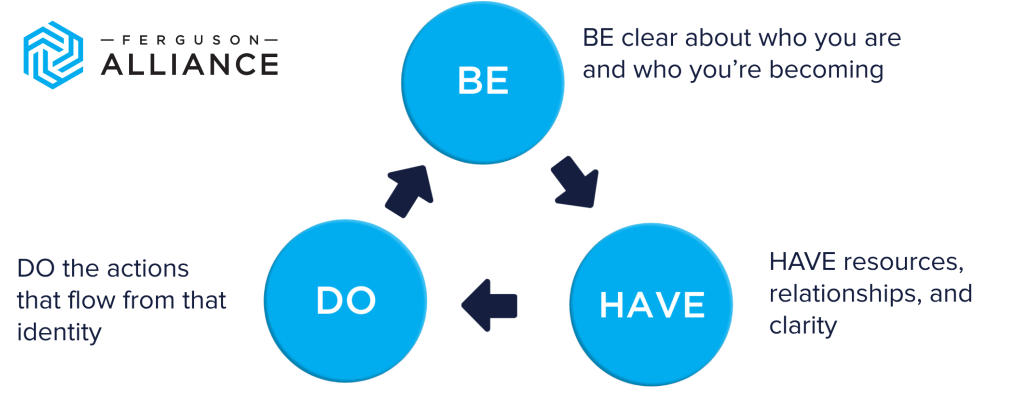
Many people approach succession planning backwards.
They think, “If I have a plan, then I’ll do the right things, and eventually I’ll be ready to hand over the business.”
But that sequence rarely leads to a healthy transition.
A more effective approach starts with identity:
- BE – Get clear on who you are and who you’re becoming.
- HAVE – Identify what you need to support that transformation—resources, relationships, and clarity.
- DO – Take intentional actions that align with your evolving identity and leverage what you have.
If you skip the “BE” work, all the technical planning in the world won’t create a healthy transition. Without that deeper work, succession plans gather dust, and relationships quietly fracture.
When leaders lack a strong sense of who they are becoming, they tend to struggle during tough times and overcompensate during good ones.
But when the “BE” work is done, you hit a sweet spot that keeps you humble during good times and sets up your future leaders for success.
Ownership vs. Leadership vs. Management
A key layer of emotional complexity associated with succession planning comes from the different roles family members play.
We often tell our clients that ownership, leadership, and management are three distinct hats that can be worn by different people at different times.
For example, a successor might be ready to manage but not ready to lead.
Or ready to lead but not ready to own.
Each transition carries different emotional tasks: letting go, stepping up, building trust, grieving old roles, and embracing new ones.
Succession planning isn’t just about moving around boxes on an org chart. It’s more about asking:
- “What does ownership mean to me?”
- “What does leadership require of me?”
- “Where am I managing out of fear versus leading with purpose?”
It takes tremendous emotional energy to have these kinds of discussions and make hard decisions.
But if you’re a business-first family and you have someone that can help hold you true to that, you can get through the difficult decisions.
You can also have difficult family conversations in a loving way that builds relationships instead of destroying them.
Grief, Fear, Hope
Founders may face unspoken grief: they often grieve the end of their most meaningful work, along with their identity as “the one in charge.”
Successors, meanwhile, confront fear of failing, disappointing, or simply not living up to an invisible standard.
I know this firsthand.
Years ago, I was the CEO of a public company where I had spent 25 years of my life. My whole identity and ego were wrapped up in that role. It was who I was.
But when the board and I disagreed on the company’s future direction, and I refused to compromise my principles, they asked me to leave.
In a moment, my world caved in.
I lost my identity. I lost my purpose. I had to find a new “why” because my old purpose – to be the best CEO that company ever had – was gone.
Ironically, the board didn’t have a strong succession plan.
They had to bring in one of their own members as interim CEO, and the company later ended up filing for bankruptcy – twice.
This experience reinforced what I had long suspected: Succession planning isn’t just important. It’s critical.
Whether for a large public company or a small family business, a succession plan has to be thoughtful, dynamic, and emotionally intelligent.
Especially in family businesses, emotional complexities make the process even more challenging.
Naming these emotions matters.
When we create space to talk about them, succession planning shifts from a technical exercise into a transformational process.
Families reconnect. Successors gain confidence. Founders find peace.
The Emotional Work Is the Real Work
At the end of the day, the technical tasks of succession are fairly straightforward: documents, titles, governance structures.
It’s the emotional work – the hard, human work – that determines whether a plan actually succeeds.
Good advisors know this.
Great advisors build the trust and safety required to do it.
I think back to that midnight phone call – the one that changed everything for me.
That’s when I learned that the real win in succession planning isn’t just closing the deal. It’s helping people feel whole on the other side of it.
If you’d like a partner in this important work, we’d love to help. Reach out today for a consultation with one of our experienced family business advisors.
Free Family Business Succession Guide and Checklist
Many owners are surprised that a succession plan touches almost every part of the business and the family.
In this e-book, we outline everything you need to create a succession plan that sets your family up for generations.
- A breakdown of the 3 separate transitions you need to plan for:
- Succession of wealth
- Succession of ownership
- Succession of leadership
- A full checklist of everything you need to do and prepare
- Explanations of the process and definitions of common succession planning terms
- Answers to frequently asked questions about succession planning
If you're struggling to create a succession plan or wondering where to start, we created this guide for you.
Enter your email address below and we'll send you a copy.
~ Rob