



Recently, I had the privilege of joining Deb Krier on the Business Power Hour podcast to discuss how to overcome common challenges in family-owned businesses. Deb’s show is renowned for delivering actionable insights for professionals and business owners, and it was an honor to share my experiences and expertise as a Certified Exit Planning Advisor (CEPA) with Ferguson Alliance.
Watch the full interview below or scroll down to read the highlights.
1. The Challenges of Family-Owned Businesses
Family businesses often face unique challenges, including:
- Valuation Discrepancies: Owners often overestimate the value of their business due to the emotional investment they’ve made over the years. At Ferguson Alliance, we help clarify the true market value and provide strategies to increase it.
- Family Dynamics: Disagreements about succession or operations can cause significant friction. Addressing these dynamics requires tact, communication, and sometimes external mediation.
- Preparation for Succession: Many business owners think they’re ready to retire but underestimate the time and preparation required. Transitioning a business—whether to the next generation or an external buyer—typically takes 3–5 years.
2. The Importance of Continuous Improvement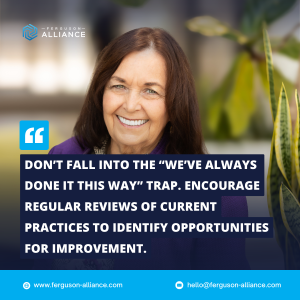
Continuous improvement is the foundation of long-term business success. It’s not a one-time project—it’s an ongoing commitment to empowering employees and refining processes. Some practical tips we discussed include:
- Empowering Employees: Give team members the tools and authority to make decisions. This fosters innovation and morale.
- Avoiding Stagnation: Don’t fall into the “we’ve always done it this way” trap. Encourage regular reviews of current practices to identify opportunities for improvement.
- Workshops Over Meetings: Workshops are more productive than traditional meetings because they encourage collaboration and active problem-solving.
3. Family First vs. Business First
Deb and I explored the concept of “family first” versus “business first” mindsets:
- A family-first business prioritizes legacy and family harmony, often sacrificing growth for cohesion.
- A business-first family focuses on performance and growth, sometimes at the expense of personal relationships.
Neither approach is inherently better; it depends on the family’s values and goals. Recognizing and aligning with these priorities is essential to navigating transitions successfully.
4. Lessons from COVID-19
The pandemic reshaped the way businesses operate, highlighting the need for:
- Disaster Recovery Plans: Many family-owned businesses lacked the infrastructure to pivot to remote work seamlessly.
- Flexibility and Innovation: Companies that adapted quickly—embracing tools like Zoom and AI—were better equipped to weather the storm.
- Cross-Training Employees: Ensuring that critical functions aren’t reliant on a single individual is vital for business continuity.
Final Thoughts
As I shared with Deb, the key to long-term success for family-owned businesses is to start planning for the future from day one. Whether it’s creating a culture of continuous improvement or preparing for succession, every step you take today can lead to greater stability and success tomorrow.