


Here’s a hard truth: conflict is inevitable in just about any kind of project you’ll take on in the business world. So, recognizing the signs of conflict early is essential to addressing and resolving issues before they escalate and completely derail your project.
Here’s how.
Signs and Symptoms of Conflict
Sometimes it’s clear early on that some members of your team just aren’t on board with a project.
This could show up as several different behaviors.
Some people might stir up gossip or discontent among the team. Others may begin to behave in ways that are unusual for them – for example, someone typically punctual and reliable beginning to come into the office or to meetings late, and maybe not meeting deadlines.
Still others may be outright argumentative, openly airing their negative feelings about the project at hand.
These behavioral shifts are all key signs that something isn’t right and that you need to help manage the situation.
How Do You Know Whether Conflict is Good or Bad?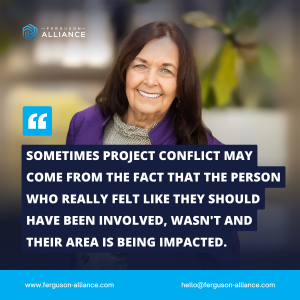
Some conflict within any project is healthy.
Your team must be strong enough to handle healthy disagreement about the best ways to move your project forward. This is the kind of conflict you actually want to encourage.
In general, you can tell that conflict is good, or healthy, when it’s actively seeking a better solution.
Constructive conflict happens when team members engage in open, respectful discussions – even when they disagree.
For example, if someone offers a suggestion that another team member doesn’t like, but the ensuing discussion leads to better solutions and innovation, this is a positive form of conflict. It’s the kind of debate that can push the team toward a more effective implementation strategy.
Bad, or unhealthy, conflict, on the other hand, looks like something else.
If a team member is openly hostile or dismissive toward others’ ideas, making their opposition well-known without offering constructive feedback or offering solutions, that behavior can create a toxic environment.
This kind of conflict isn’t conducive to productive work and can derail a project.
Tips for Managing Conflict on a Project
Any group of smart, passionate professionals working collaboratively will disagree at some point about the best path forward.
Most of the time, that disagreement is healthy and stays focused on addressing the issues at hand.
But to keep unhealthy conflict from thriving, here are some actions you can take:
- Involve the right people
- Adapt the team as necessary
- Involve a trusted partner
Let’s take a closer look at what each of these actions entails.
Involve the Right People
A lot of the conflict associated with most projects makes its appearance during the implementation phase. That’s chiefly because the implementation phase is when things begin to get disruptive.
In order to prevent unhealthy conflict at this stage, it’s important to involve all the people who will be involved in – and affected by – project implementation in the earliest possible phases.
Many times, we find that conflict stems from someone affected by a project who wasn’t involved in early stages of discussion. Feelings of exclusion are powerful, and if they aren’t addressed head-on, they can fester and create a toxic situation.
With earlier involvement, people can voice their fears and frustrations, and perhaps offer alternate perspectives that make the project stronger in the long run. And they can do that in a safe environment that doesn’t take the project off the rails before it ever starts.
Adapt the Team as Necessary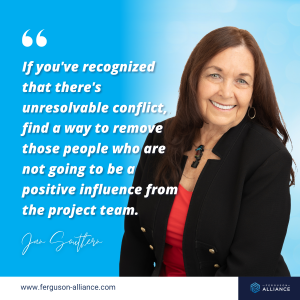
Sometimes, no matter what you do, unhealthy conflict will make an appearance.
If you recognize that certain team members are consistently negative or resistant without offering constructive criticism, it might be time to remove them from your implementation team. It’s crucial to make these decisions carefully, always considering the overall benefit to the project and team dynamics.
While it’s important to involve as many voices as possible in the discussion/planning phase of a project, it’s equally important to make sure your implementation team is a core group with the right attitude and set of skills to drive your project home.
You have to recognize when to move people off the implementation team if they’re not helping the group make progress toward your ultimate goal – and especially if they’re causing or encouraging conflict.
Involve a Trusted Partner
Sometimes, conflicts can reach a point where internal resolution seems impossible.
We are big believers in the value of outside perspective, and that’s where a trusted partner can be especially helpful.
If you’re running into unavoidable conflict or think you might have difficulty with conflict on a project, it’s a good idea to bring in an outside voice to mediate and offer solutions and alternate viewpoints.
Sometimes an outsider can see solutions that aren’t visible to those involved directly in the conflict.
While conflict is a natural part of any project, managing it effectively is critical for your business’ success.
By recognizing the signs early and using strategic management techniques, you can maintain a healthy, productive environment for your team.
If you’re interested in learning more about how our team at Ferguson Alliance can assist you with projects, we encourage you to reach out today to set up a call with one of our family business advisors. We’d love to help.