


Creating an advisory board can be a transformative step for family businesses aiming to increase their value and strengthen their legacy.
However, we’ve seen that many business owners approach this task with uncertainty and even resistance – sometimes because they just don’t know what they don’t know, and other times because they’ve heard negative stories from others.
But building an advisory board doesn’t have to be intimidating.
With a few simple, thoughtful questions, you can assemble a group of advisors that will help guide your business in the right direction.
Let’s look at how. You can watch the video or scroll below to read the text version.
What Is An Advisory Board?
As it turns out, an advisory board is just what it sounds like – a group of advisors that you assemble on a regular basis to help you navigate the business challenges that come your way.
Unlike a corporate board, an advisory board has no fiduciary responsibility, and its advice is non-binding.
Some advisory boards for early stage businesses are hands-on, meeting monthly or more, even getting involved in the daily grind. Business that are beyond the startup phase mostly meet quarterly, with an eye toward the big picture. Ultimately, the way they work is up to you.
Here are the crucial questions every business owner should consider when setting up an advisory board.
1. Purpose and Goals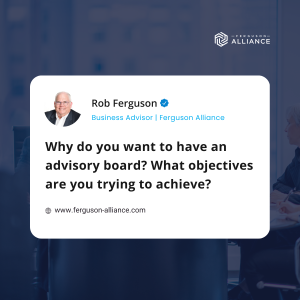
- What specific objectives do I want to achieve by establishing an advisory board?
- How will an advisory board contribute to the growth and sustainability of my family business?
Why do you want an advisory board in the first place?
Define some clear and measurable objectives—whether that’s driving growth, entering a new market or effectively approaching succession planning.
Without specific goals, it’s easy for an advisory board to become more of a social club than a true strategic asset.
2. Expertise and Experience
- What expertise and experience are lacking within our family and current team?
- What specific skills or knowledge do I seek in advisory board members to complement our strengths?
Identify the knowledge and skills your business currently lacks, then seek them out for your advisory board.
For example, if your goal is to develop an e-commerce department, but your leadership team lacks online sales experience, look for and pursue advisors with that specific expertise.
Your advisory board should complement your existing strengths and fill in gaps – not repeat skill sets.
3. Composition and Diversity
- How many members should be on the advisory board?
- Should the advisory board include family members or be comprised entirely of external advisors?
- How can I ensure diversity in terms of background, industry experience, and perspectives among advisory board members?
For the best results, you want an advisory board with a balanced composition of independent members and internal family members.
In addition, diversity in perspectives, including independent voices and those familiar with family dynamics, can provide comprehensive insights into external changes and their impacts on your business strategy.
The more diverse your advisory board, the better they’ll be able to provide comprehensive guidance and direction.
4. Commitment and Expectations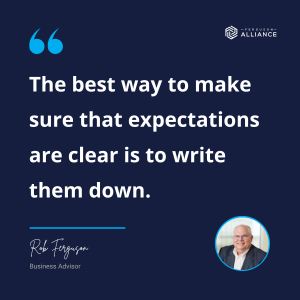
- What level of time commitment can I reasonably expect from advisory board members?
- What expectations do I have regarding their involvement in strategic decision-making and operational matters?
Serving on an advisory board is a big responsibility. So, treat it that way.
In fact, you should treat your advisory board with the seriousness of a fiduciary board.
Set clear expectations through a formal advisory board agreement that covers decision-making, meeting attendance, and compensation.
This document ensures that advisors are committed to the board’s goals and understand their responsibilities.
Importantly, it’s up to you and your leadership team to make sure that the members of your advisory board comply with the expectations you’ve set for them.
5. Compensation and Incentives
- Should advisory board members be compensated financially, or will they serve on a voluntary basis?
- Are there other incentives or perks I can offer to attract high-caliber advisors?
While many advisors aren’t motivated by money, providing them with some level of compensation is a gesture that acknowledges their time, their expertise – and their overall value to your business.
Offering payment, along with other incentives, like product samples, can help attract top talent, and it also reflects the importance of their contributions.
6. Confidentiality and Trust
- How will I ensure confidentiality and manage conflicts of interest within the advisory board?
- What measures can be put in place to build trust and foster open communication between the advisory board and family stakeholders?
Establishing trust is critical to your advisory board’s success, especially for businesses new to including outsiders in their strategy and operations.
Implement non-disclosure agreements and consider using a professional firm to vet and recommend potential advisors.
These steps help protect sensitive information and ensure that the advisors you choose are both experienced and trustworthy.
7. Term Limits and Renewal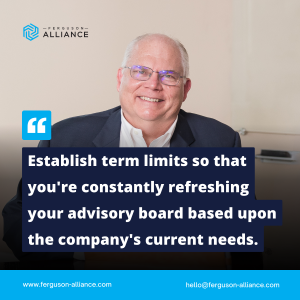
- What should be the term limits for advisory board members?
- How will the renewal process be handled to ensure a fresh perspective while retaining valuable institutional knowledge?
It’s a good idea to set term limits for your advisors, which will help keep your advisory board dynamic and relevant.
A standard recommendation is a three-year term for advisors, with an annual reaffirmation process.
This allows advisors to step down gracefully if they need to, and it also provides an opportunity to regularly refresh the board’s expertise.
This ongoing mix of veteran and new perspectives can be a powerful strategic asset to your business.
8. Succession Planning and Continuity
- How can the advisory board contribute to succession planning and continuity efforts within the family business?
- What role will the advisory board play in grooming the next generation of leadership?
Advisory boards can play a vital role in succession planning and business continuity.
Advisors can mentor emerging leaders and act as a backstop during emergencies.
They also can help oversee long-term succession plans, ensuring a smooth transition and the continuity of business operations during changes in team leadership.
9. Legal and Governance Considerations
- What legal and governance structures need to be put in place to formalize the advisory board’s role and responsibilities?
- How will the advisory board interact with existing governance bodies, such as the board of directors or family council?
Advisory boards should challenge management to ensure alignment with industry regulations and employment laws.
A strong group of advisors brings an additional layer of oversight to company governance, integrating business goals with family needs – and helping your leadership team balance personal and professional interests.
10. Exit Strategy
- Under what circumstances should the advisory board be dissolved or restructured?
- How can I ensure a smooth transition if the family business undergoes significant changes or exits the market?
As with so many things, it makes sense to begin with the end of your advisory board in mind.
At the start, establish clear guidelines for winding down the advisory board or transitioning advisors. This might occur during significant changes like a business sale or leadership transition.
Make sure the process is flexible enough to accommodate evolving business needs – and that it allows for the inclusion of new, relevant expertise.
A well-structured advisory board brings expert guidance and strategic oversight, making it a valuable asset for any family business.
Building your first advisory board may feel intimidating, but by asking these important questions, you can build a robust advisory board that not only supports your immediate business goals, but also contributes to long-term success and prosperity.
If you’d like to talk more about how to get started on this process, our team at Ferguson Alliance would love to help.